Hyundai · 2022–2026
IONIQ 5 Recalls
7 known recalls affecting the Hyundai IONIQ 5 (2022–2026). Enter your VIN to check if your specific vehicle is affected, or browse by model year below.
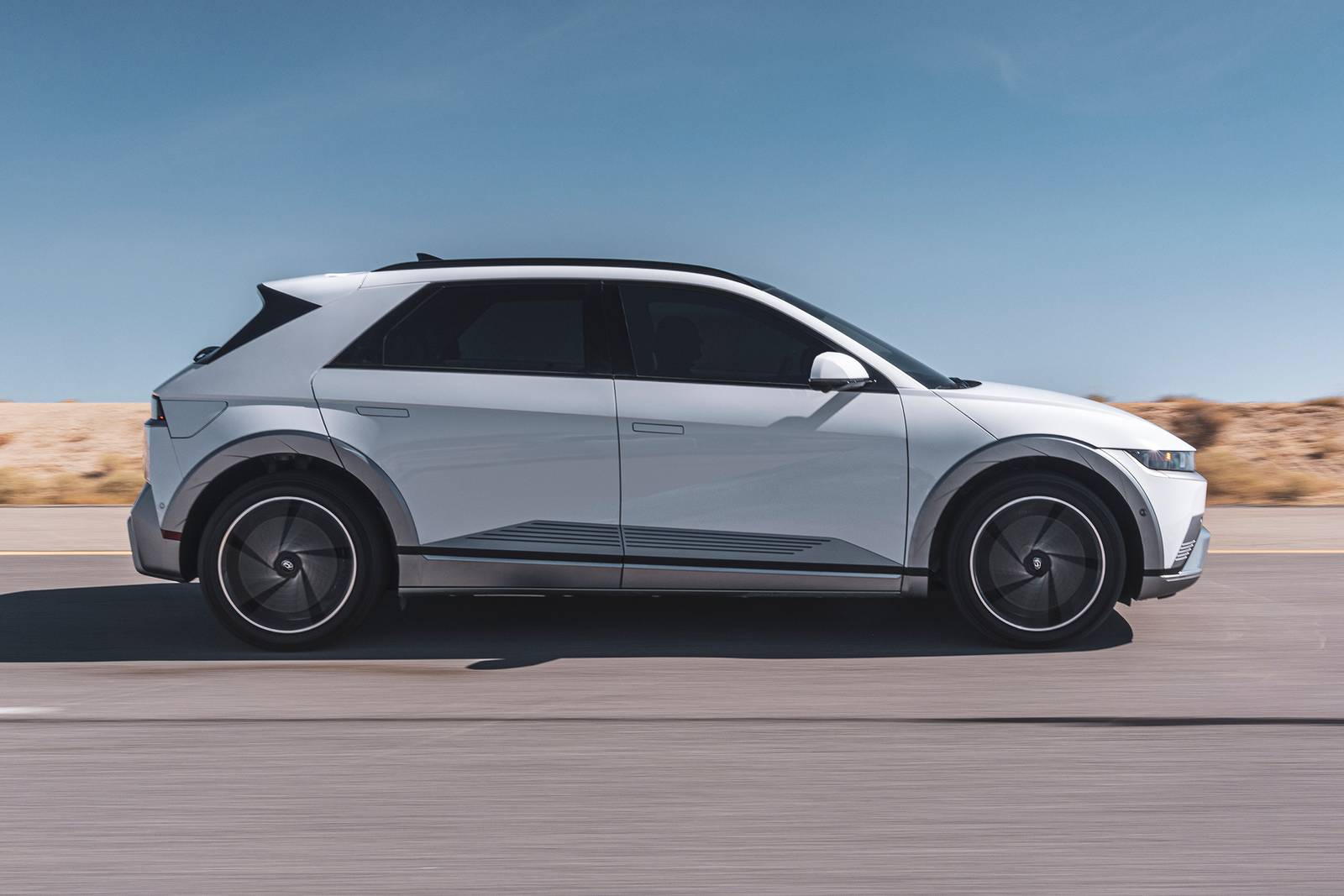
Hyundai IONIQ 5 Recalls
Summary
Issue: On certain vehicles, the software update completed by a Hyundai dealer for recall R0277 (Transport Canada recall no. 2025-054) may not be effective. As a result, a second repair is required. On certain vehicles, a software problem in the integrated electronic brake could cause reduced braking when using the left-foot braking (LFB) feature. Additionally, a software problem in the vehicle control unit could cause the vehicle to continue to accelerate for a short period of time when using the N e-Shift feature. Note: This recall replaces recall R0277 (Transport Canada recall no. 2025-054). This recall only affects certain Ioniq 5 N models. Safety Risk: Reduced braking can cause extended stopping distances and increase the risk of a crash. A vehicle that continues to accelerate could create the risk of a crash. Corrective Actions: To reduce the safety risk, Hyundai recommends not to use the LFB or N e-SHIFT features until the recall repairs have been completed. Hyundai will notify owners by mail and advise you to take your vehicle to a dealership to update the integrated electronic brake and vehicle control unit software.
Summary
This recall was replaced by Transport Canada recall no. 2025-193. Issue: On certain vehicles, a software problem in the integrated electronic brake could cause reduced braking when using the left-foot braking (LFB) feature. Note: This recall only affects certain Ioniq 5 N models. Safety Risk: Reduced braking can cause extended stopping distances and increase the risk of a crash. Corrective Actions: To reduce the safety risk, Hyundai recommends not to use the LFB feature until the recall repairs have been completed. Hyundai will notify owners by mail and send a wireless over-the-air software update to eligible vehicles to update the integrated electronic brake and vehicle control unit software. Alternatively, you may schedule an appointment to have the update performed at a Hyundai dealership. Note: Potential complications have been reported with the corrective actions and, as a result, the recall campaign is currently suspended. Hyundai is investigating the root cause and will provide an update once available. For owners who have already had the recall repairs completed, it is advised NOT TO USE the N e-SHIFT feature.
Summary
Issue: Over time, the integrated charging control unit (ICCU) could become damaged. As a result, the 12 V battery will not charge and could cause the vehicle to enter a reduced power mode. If this happens, and you continue to drive the vehicle, there could be a loss of power to the wheels. Note: This recall replaces Transport Canada recall no. 2024-174. Vehicles that were repaired under that recall also require this repair. This problem will cause a warning light to turn on and warning messages to display before any loss of power. For the Genesis GV70 and G80 models, only the electric versions (EV) are affected. Safety Risk: A loss of power to the wheels could increase the risk of a crash. Corrective Actions: Hyundai will notify owners by mail and advise you to take your vehicle to a dealership to update the vehicle software. The dealer will also inspect and, if necessary, replace the ICCU and ICCU fuse.
Summary
Issue: On certain vehicles, the compliance label may be missing information in French. The words listed on the label for "Tires", "Rims", "Front" and "Rear" appear in English only, when they should be listed as "Tires/Pneus", "Rims/Jantes", "Front/Avant" and "Rear/Arriere". Canadian regulations require this information to be listed on the label in both English and French. Safety Risk: These small errors do not affect vehicle safety. Corrective Actions: This is not a recall. The company has corrected the compliance label for all new vehicles.
Summary
This recall was replaced by Transport Canada recall no. 2024-701. Issue: Over time, the integrated charging control unit (ICCU) could become damaged. As a result, the 12 V battery will not charge and could cause the vehicle to enter a reduced power mode. If this happens, and you continue to drive the vehicle, there could be a loss of power to the wheels. Note: This problem will cause a warning light to turn on and warning messages to display before any loss of power. Safety Risk: A loss of power to the wheels could increase the risk of a crash. Corrective Actions: Hyundai will notify owners by mail and advise you to take your vehicle to a dealership to update the vehicle software. The dealer will also inspect and, if necessary, replace the ICCU and ICCU fuse.
Summary
Issue: On certain vehicles, the rear inner axle shaft may not have been manufactured properly. As a result, the inner axle shaft could break and cause a loss of power to the wheels. Safety Risk: A sudden loss of power to the wheels could increase the risk of a crash. Corrective Actions: Hyundai will notify owners by mail and advise you to take your vehicle to a dealership to replace the rear inner axle shaft.
Summary
Issue: On certain vehicles, the parking pawl could disengage for a short time just after the vehicle is parked and turned off. As a result, the vehicle could move suddenly if the parking brake isn't used. Safety Risk: A parked vehicle that moves suddenly could create the risk of an injury or a crash. Corrective Actions: Hyundai will notify owners by mail and instruct you to take your vehicle to a dealership to update the shifter control unit software. To reduce the safety risk, Hyundai recommends that you should use the parking brake each time that you park.

Related Recall Checks
Check recalls for specific Hyundai IONIQ 5 model years